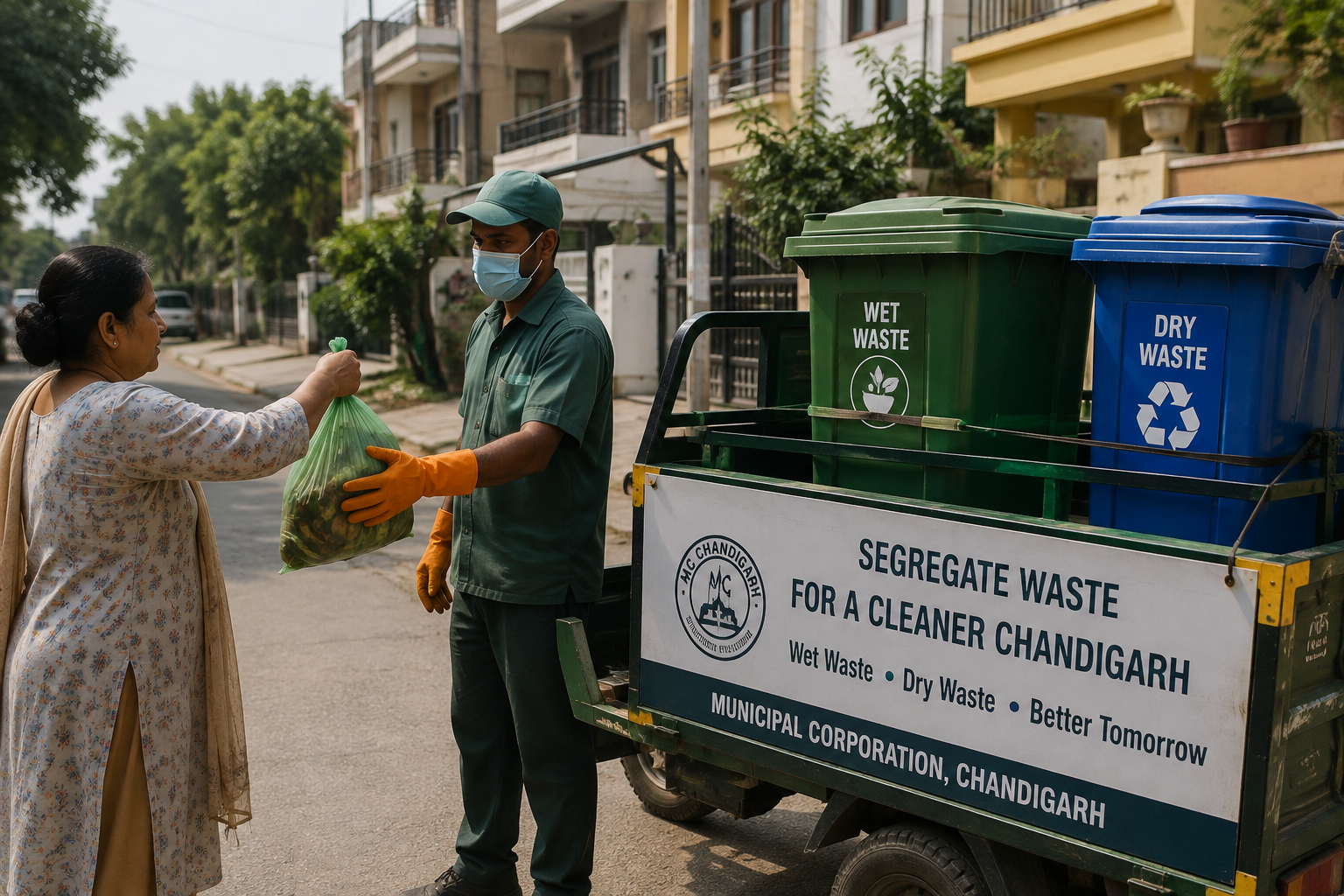
In a significant push towards strengthening urban sanitation, the Chandigarh Municipal Corporation (MC) is preparing to extend its door-to-door segregated waste collection service to the city's remaining uncovered residential areas. The move is expected to bring every household in Chandigarh under the formal waste collection network for the first time since the programme was launched nearly a decade ago.
The extension will encompass ten highly populated village and housing colony areas that have been lying outside the ambit of the organized waste management process till now. The residents of such areas have been using non-formal techniques of waste disposal, and this has led to garbage dumping in open places, open plots, and roadside areas.
The MC officials state that the plan is a result of many rounds of negotiations between the civic agency and the representatives of the door-to-door waste collectors' community. With operational and monetary issues being sorted out, the MC is now set on its plan to integrate the rest of the residential areas into the segregation network.
The areas proposed to be covered include Attawa, Badheri, Butrela, Burail, Sector 63, Maloya Village, EWS Colony Maloya, Palsora, Dadumajra Village and Kajheri. Collectively, these localities comprise more than 46,000 households, making this one of the largest expansions of Chandigarh's waste management programme in recent years.
To ensure seamless implementation, the Municipal Corporation will deploy additional sanitation workers and procure 21 tractor-trolleys through the Government e-Marketplace (GeM) platform. The proposal has already received approval from the MC House and is expected to require additional annual funding for manpower and operational expenses.
Officials said the expanded service will operate under the Solid Waste Management Bylaws, 2018, with waste collectors continuing to charge user fees as prescribed by the Chandigarh Administration. A formal agreement outlining operational responsibilities has also been prepared to facilitate the rollout.
The initiative comes at a crucial time as Chandigarh continues to face challenges in improving waste segregation at the household level. While the city introduced source segregation in 2017, compliance has remained inconsistent, affecting its performance in national cleanliness surveys. Civic officials believe extending collection services to the remaining residential pockets will help improve segregation rates, discourage illegal dumping and increase recycling efficiency.
Urban planners and environmental experts have welcomed the move, noting that universal access to organised waste collection is essential for sustainable urban development. They believe bringing previously uncovered neighbourhoods into the formal system will not only improve public hygiene but also reduce pressure on landfill sites and strengthen Chandigarh's overall waste processing infrastructure.
With preparations underway, the Municipal Corporation expects the expansion to significantly improve the city’s waste management network, ensuring that every residential area is connected to an organised collection system while supporting Chandigarh’s long-term cleanliness and sustainability goals.